
Crowns and BridgesIn Lawrence, KS
Missing a few teeth in a row? We've got you! Since crowns are affixed to your smile, they won’t move or shift so you can get back to smiling again.
What are dental crowns and bridges?
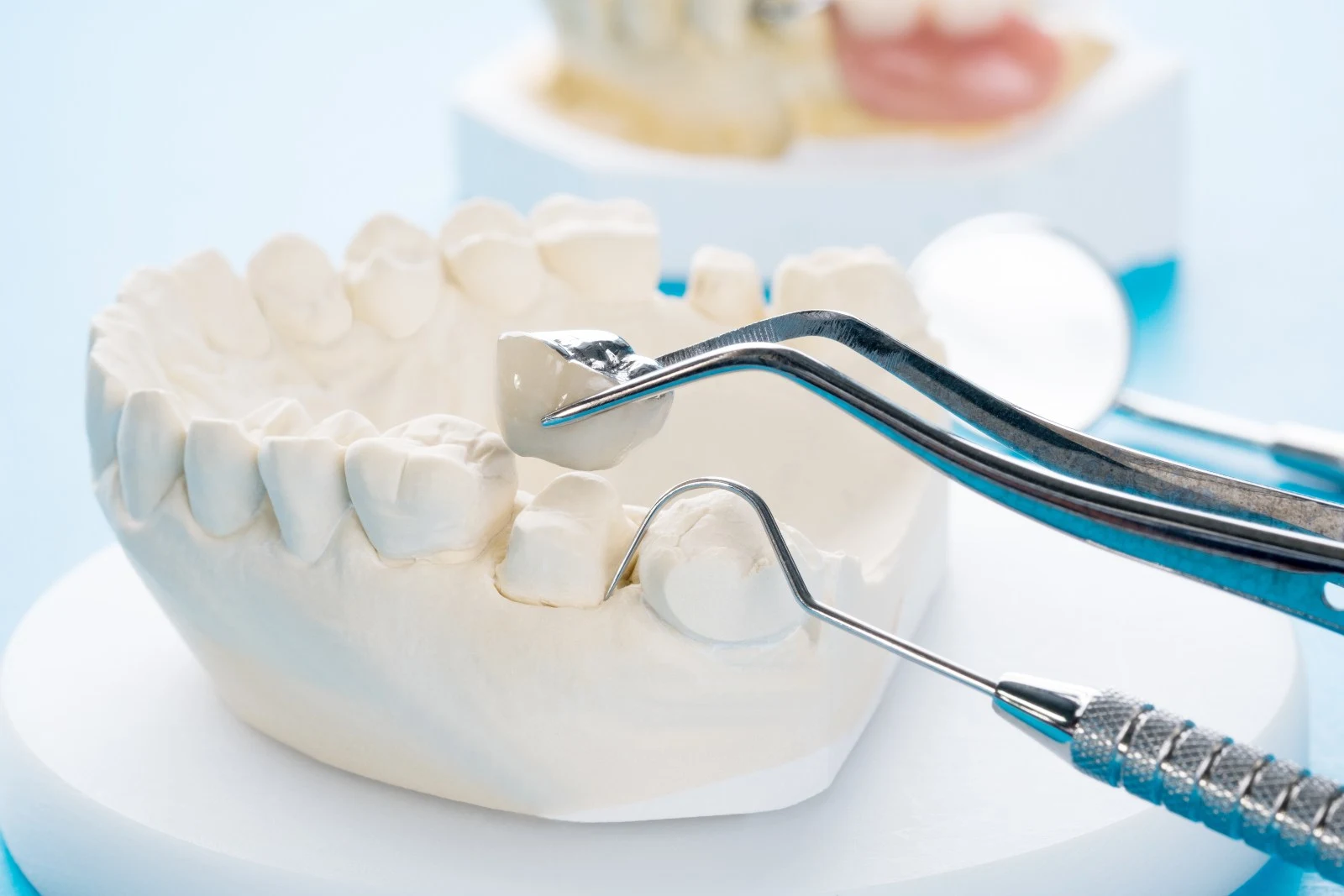
Dental crowns and bridges allow dentists to protect and restore damaged teeth. Typically, when tooth decay is severe enough that it can’t be treated with a filling, a dental crown will be used to cover, or cap, the tooth. Crowns are also commonly used to seal teeth that have been treated with root canal therapy. And occasionally, dental crowns are used for cosmetic purposes or in smile makeovers.
A dental bridge is a type of dental work that replaces a tooth or a few consecutive missing teeth. Two dental crowns are placed on the healthy teeth living on either side of the gap left by your lost tooth. A false tooth, or pontic, is attached to the crowns and literally bridges the gap, replacing your missing tooth.


Your Care, Your Terms
You deserve affordable, accessible care. That’s why we provide a variety of flexible financing options to meet your unique needs. Ready to work out a budgeting plan? Reach out to our team to get the conversation started.
Types of dental crowns and bridges
What Conditions Can Invisalign Treat?
How many orthodontic issues can be solved by Invisalign? Lawrence dentists use Invisalign to address a wide range of orthodontic concerns, from mild cosmetic adjustments to more complex bite issues. While every smile is unique, these clear aligners are well-suited for many of the most common alignment challenges.
- Crowded teeth. When there is not enough space in the jaw, teeth can overlap or twist. Invisalign gradually shifts teeth into proper alignment to open up that crowding.
- Gapped teeth. Spaces between teeth can affect both your appearance and your bite. Clear aligners close those gaps progressively over the course of your treatment.
- Overbite. An overbite occurs when your upper front teeth overlap too far over the lower teeth. Invisalign can guide your bite into a healthier, more balanced position.
- Underbite. When the lower teeth sit in front of the upper teeth, it can cause uneven wear and jaw discomfort. Invisalign treats many underbite cases without the need for traditional braces.
- Crossbite. A crossbite means some upper teeth sit inside the lower teeth rather than outside. Left untreated, this can lead to wear, chipping, and jaw strain. Invisalign addresses crossbites with targeted, precise movement.
- Open bite. If your upper and lower teeth do not meet when you close your mouth, that is an open bite. Invisalign can help close this gap and improve both function and appearance.
- Relapse after previous orthodontic treatment. Teeth can shift over time after earlier treatment. Invisalign is often an excellent option for patients looking to fine-tune or restore their results.
Not every case is a fit for clear aligner therapy alone. During your consultation, Dr. Salava will review your bite, spacing, and alignment in full and walk you through which treatment approach is best suited to your goals.
Our Difference
How dental crowns and bridges work together
FAQs
Frequently Asked Questions
Check out these frequently asked questions, or call us to speak with our team.
Schedule Your Invisalign Consultation in Lawrence Today
If you have been putting off treatment because you did not want metal braces, the answer could be Invisalign. Lawrence patients have an opportunity for a solution that better fits their lives. Dr. Salava and the team at The Dental Studio are here to answer your questions, review your options, and help you take the first step toward a smile you feel great about. Call us at (785) 331-0027 or request an appointment online to get started.
